About
ブログ

軽い読み物に興味はありますか?

当ブログでは、色と見た目のニーズを向上させるための役立つ教育情報、アドバイス、研究結果、洞察を継続的に更新しています。ドリンクを片手に、私たちのストーリーをお楽しみください!

Explore Our Stories
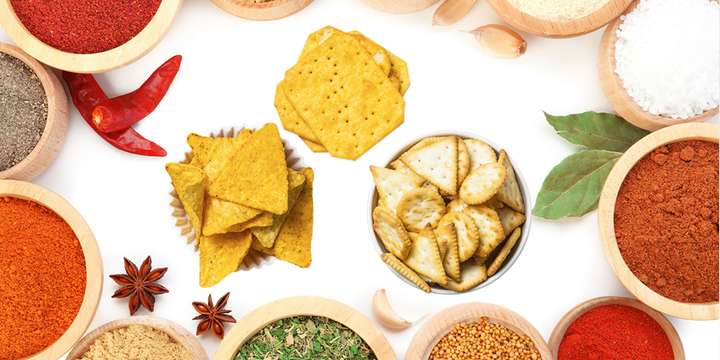
Different types of crackers in bowls surrounded by bowls of spices

"From Spices to Snacks: Solving Food Color Measurement Challenges Based on Particle Size"

Read More

Explore Our Products

VIEW MORE

smart-spectrophotometer.jpg

"Smart Spectrophotometers Offer a Better Way to Measure the Color of Cookie Samples"

Read More
smart-spectrophotometer.jpg

"Smart Spectrophotometers Offer a Better Way to Measure the Color of Cookie Samples"

Read More
smart-spectrophotometer.jpg

"Smart Spectrophotometers Offer a Better Way to Measure the Color of Cookie Samples"

Read More
smart-spectrophotometer.jpg

"Smart Spectrophotometers Offer a Better Way to Measure the Color of Cookie Samples"

Read More
Different types of crackers in bowls surrounded by bowls of spices

"From Spices to Snacks: Solving Food Colour Measurement Challenges Based on Particle Size"

Read More
Different types of crackers in bowls surrounded by bowls of spices

"From Spices to Snacks: Solving Food Color Measurement Challenges Based on Particle Size"

Read More

From Spices to Snacks: Solving Food Color Measurement Challenges Based on Particle Size

Posted on by HunterLab

One inconsistent product batch can trigger a cascade of problems — customer complaints, product waste, and costly rework cycles that impact your bottom line. Whether you're measuring color in paprika or breakfast cereal, particle size variations can compromise brand consistency across product lines.

Measurement inconsistency is only a symptom. The real issue is choosing the wrong spectrophotometer/colorimeter for your specific particle size. Fine spice powders demand different approaches than irregular snack pieces, yet many food manufacturers continue using solutions that weren't designed for their sample's characteristics. Understanding particle size effects on color measurement and exploring the best way to address the problems is the first step toward consistent, repeatable results.

What Color Measurement Challenges Do Different Food Particle Sizes Create?

Capturing accurate data in fine powders involves distinctly different challenges than quantifying appearance in snack foods.

When Small Particles Create Big Problems

Finer particles, like spices, seasonings, and powdered flavorings, can form relatively uniform surfaces when properly handled. Yet, achieving that uniformity consistently is where many powder color measurement programs fail. As samples settle and pack during preparation, surface texture variations often form. Even minor variations affect how light interacts with the material, creating measurement variabilities that have nothing to do with the actual product color.

For fine particles like these, a 1-inch area of view (AOV) provides sufficient coverage when the sample surface is properly prepared. The key is eliminating operator-introduced errors that cause artificial surface variations. When handling procedures remain consistent across samples and lab operators, you create more predictable measurement conditions.

Large Particle Measurement Pitfalls

Cereals, nuts, snacks, whole beans, and other large or irregular particles create entirely different measurement challenges.

Unlike fine powders that can settle into smooth surfaces, large particles maintain their individual shapes and create voids between pieces. These gaps allow light to penetrate differently depending on how particles settle in the sample container. One measurement might capture more shadow areas, while another captures more direct particle surfaces, leading to inconsistent results.

Surface texture variations in large particle samples further complicate precise data capture. Individual pieces may have curved surfaces, irregular edges, or varying thicknesses, creating shadows and light-reflection patterns that change with each sample presentation. Traditional color spectrophotometers with a 1-inch AOV designed for smooth, uniform surfaces struggle with these texture variations because they rely on single measurements of limited areas.

Posted in Color In Food Industry

Smart Spectrophotometers Offer a Better Way to Measure the Color of Cookie Samples

Posted on 6月 08, 2026 by HunterLab

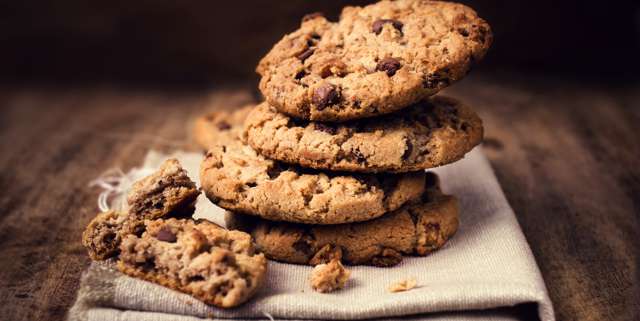
高品質のクッキーは、ロットごとに色が一定でなければならない。画像ソースShutterstockユーザーNatali Zakharova氏

完璧に焼き上げられたクッキーをかじらずにはいられない人はほとんどいないだろう。キャラメリゼした砂糖の食欲をそそるノスタルジックな香りと、こんがり焼けたクランブルの豊かな風味がたまらないという人も多いだろう。しかし、焼き過ぎや焼き不足のクッキーを食べたことがある人なら、すべてのクッキーが本来のおいしさを味わえるわけではないことを知っているはずだ。オーブンの温度が高すぎたり低すぎたり、クッキーを焼く時間が長すぎたり短すぎたりといった要素は、クッキーの食感や色だけでなく、食べた人の経験にも悪影響を与える可能性があります。

このため、大規模なクッキー製造業者は、クッキー製品の色を注意深く測定する必要があります。砕けやすいクッキーのような)食感のあるサンプルの色を正確に測定できるスマートな分光光度計を使えば、クッキーのすべてのバッチが完璧に焼かれ、顧客に均一な色に見えるようにすることができます。毎年数千パックのグルメクッキーを製造している場合でも、多種多様な味や食感のクッキーを数百万個製造している場合でも、スマート分光光度計は製造工程を改善するのに役立ちます。

色はクッキーの品質の証

クッキーやその他の焼き食品の色は、その製品がどのような味になりそうかについて、多くのことを教えてくれる。1メイラード反応の間、食品中のタンパク質と糖が高温によって分解され、その結果、色が濃くなり、味と香りが大きく変化する。クッキーの場合、メイラード反応は生のクッキー生地の色を茶色くし、強い芳香化合物、つまりあの古典的な焼きたてのクッキーの香りを作り出す。

クッキー・メーカーにとって、キャラメリゼとメイラード反応に細心の注意を払うことは重要である。同様に、熱への露出が少なすぎると、メイラード反応やキャラメリゼの発達が妨げられ、クッキーは柔らかく、淡白で、やや味気ないものになってしまいます。2 このため、すべてのクッキー製品がちょうどよい量のキャラメリゼを経て、全体的に一貫した色に見えるように、スマートな分光光度計が必要なのです。

クッキーの色に大きなばらつきがあるのは、工業用オーブンの温度設定が高すぎるか低すぎるサインかもしれません。画像ソースShutterstockユーザーBrent Hofacker氏

Posted in Color In Food Industry

Smart Spectrophotometers Offer a Better Way to Measure the Color of Cookie Samples

Posted on 6月 08, 2026 by HunterLab

Las galletas de alta calidad deben tener un color uniforme de un lote a otro. Fuente de la imagen: Shutterstock usuario Natali Zakharova

Pocas personas pueden resistirse a mordisquear una galleta perfectamente horneada. A muchos se les hace la boca agua con el nostálgico aroma del azúcar caramelizado y el dorado de las migas. Pero si alguna vez ha comido una galleta poco hecha o demasiado hecha, sabrá que no todas las galletas son tan deliciosas como deberían. Factores como ajustar la temperatura del horno demasiado alta o demasiado baja u hornear las galletas durante demasiado tiempo o demasiado poco pueden afectar negativamente a la textura y color de la galleta, así como a la experiencia de quien la come.

Esta es la razón por la que los fabricantes de galletas a gran escala necesitan medir cuidadosamente el color de sus productos de galletas. Con un espectrofotómetro inteligente capaz de medir con precisión el color de muestras con textura (como las galletas desmenuzables), puede asegurarse de que cada lote de galletas se hornea a la perfección y de que todos tienen un color uniforme para sus clientes. Tanto si produce sólo unos pocos miles de paquetes de galletas gourmet al año, como si fabrica millones de galletas de una amplia variedad de sabores y texturas, un espectrofotómetro inteligente puede ayudarle a perfeccionar su proceso de fabricación.

El color es un signo de la calidad de las galletas

El color de las galletas y otros alimentos horneados puede decir mucho sobre el sabor del producto. Esto se debe a la caramelización y a la reacción de Maillard, un complejo proceso químico que hace que los alimentos se vuelvan marrones cuando se exponen al calor.1 Durante la reacción de Maillard, las proteínas y los azúcares de los alimentos se descomponen por las altas temperaturas, lo que provoca una coloración más profunda y un cambio significativo en el sabor y el aroma. En el caso de las galletas, la reacción de Maillard oscurece el color de la masa cruda y produce fuertes compuestos aromáticos, el clásico olor a galleta recién horneada.

Para los fabricantes de galletas, es importante prestar mucha atención a la caramelización y a la reacción de Maillard, ya que una exposición excesiva al calor a lo largo del tiempo podría dar como resultado una galleta demasiado amarga y quebradiza. Del mismo modo, una exposición demasiado escasa al calor impedirá el desarrollo de la reacción de Maillard o caramelización, y la galleta será blanda, pálida y de sabor algo insípido. Los clientes son conscientes de la relación entre el color, la textura y la calidad de las galletas, y su aspecto puede influir en sus hábitos de compra.2 Por eso necesita un espectrofotómetro inteligente para asegurarse de que todos sus productos de galletas han pasado por el grado justo de caramelización y tienen un color uniforme en general.

Las variaciones significativas en el color de las galletas podrían ser una señal de que la temperatura de su horno industrial está ajustada demasiado alta o demasiado baja. Fuente de la imagen: Shutterstock usuario Brent Hofacker

Posted in Color In Food Industry

Smart Spectrophotometers Offer a Better Way to Measure the Color of Cookie Samples

Posted on 6月 08, 2026 by HunterLab

High-quality cookie products should be consistent in color from batch to batch. Image Source: Shutterstock user Natali Zakharova

Few people can resist nibbling on a perfectly-baked cookie. Many find the mouthwatering, nostalgic aromas of caramelized sugar coupled with the rich golden brown crumbles downright irresistible. But if you’ve ever eaten an under or overbaked cookie, you know that not all cookies are as delicious as they should be. Factors like setting the oven temperature too high or too low or baking the cookies for too long or too little time could negatively impact the texture and color of the cookie as well as someone’s experience eating it.

This is why large-scale cookie manufacturers need to carefully measure the color of their cookie products. Using a smart spectrophotometer that is capable of accurately measuring the color of textured samples (like crumbly cookies), you can ensure that every batch of cookies is baked to perfection and that they all appear uniform in color to your customers. Whether you produce just a few thousand packages of gourmet cookies every year, or you make millions of cookies in a wide variety of flavors and textures, a smart spectrophotometer can help you refine your manufacturing process.

Color is a Sign of Cookie Quality

The color of cookies and other baked foods can tell you a great deal about how the product will likely taste. This is due to caramelization and the Maillard reaction, a complex chemical process that causes food to turn brown as it’s exposed to heat.1 During the Maillard reaction, the proteins and sugars in the food are broken down by high temperatures, which results in deeper coloration and a significant change in flavor and aroma. In the case of cookies, the Maillard reaction browns the color of the raw cookie dough and produces strong aromatic compounds—that classic freshly-baked cookie scent.

For cookie manufacturers, paying close attention to caramelization and the Maillard reaction is important because too much exposure to heat over time could result in an overly bitter, brittle cookie. Likewise, too little heat exposure will impede the development of the Maillard reaction or caramelization, and the cookie will be soft, pale, and somewhat bland in flavor. Customers are aware of the connection between cookie color, texture, and quality, and the appearance of the cookie may impact a customer’s buying habits.2 This is why you need a smart spectrophotometer to ensure that all of your cookie products have gone through just the right amount of caramelization and appear consistent in color overall.

Significant variations in cookie color could be a sign that your industrial oven temperature is set too high or too low. Image Source: Shutterstock user Brent Hofacker

Posted in Color In Food Industry

Smart Spectrophotometers Offer a Better Way to Measure the Color of Cookie Samples

Posted on 6月 08, 2026 by HunterLab

Hochwertige Keksprodukte sollten von Charge zu Charge eine gleichmäßige Farbe aufweisen. Bildquelle: Shutterstock-Benutzer Natali Zakharova

Nur wenige Menschen können dem Naschen eines perfekt gebackenen Kekses widerstehen. Viele finden die nostalgischen Aromen von karamellisiertem Zucker in Verbindung mit den goldbraunen Streuseln geradezu unwiderstehlich. Aber wenn Sie schon einmal einen zu wenig oder zu stark gebackenen Keks gegessen haben, wissen Sie, dass nicht alle Kekse so lecker sind, wie sie sein sollten. Faktoren wie eine zu hohe oder zu niedrige Ofentemperatur oder eine zu lange oder zu kurze Backzeit können sich negativ auf die Textur und Farbe des Kekses auswirken und damit auch auf den Genuss.

Aus diesem Grund müssen große Kekshersteller die Farbe ihrer Keksprodukte sorgfältig messen. Mit einem intelligenten Spektralphotometer, das in der Lage ist, die Farbe von strukturierten Proben (wie z. B. krümeligen Keksen) genau zu messen, können Sie sicherstellen, dass jede Charge von Keksen perfekt gebacken wird und dass sie Ihren Kunden einheitlich in der Farbe erscheinen. Ganz gleich, ob Sie nur ein paar tausend Packungen Gourmet-Kekse pro Jahr herstellen oder Millionen von Keksen in einer Vielzahl von Geschmacksrichtungen und Texturen - ein intelligentes Spektralphotometer kann Ihnen helfen, Ihren Herstellungsprozess zu optimieren.

Farbe ist ein Zeichen für Keksqualität

Die Farbe von Keksen und anderen gebackenen Lebensmitteln kann viel darüber aussagen, wie das Produkt wahrscheinlich schmecken wird. Das liegt an der Karamellisierung und der Maillard-Reaktion, einem komplexen chemischen Prozess, bei dem sich Lebensmittel unter Hitzeeinwirkung braun verfärben.1 Bei der Maillard-Reaktion werden die Proteine und Zucker in den Lebensmitteln durch hohe Temperaturen aufgespalten, was zu einer tieferen Färbung und einer deutlichen Veränderung von Geschmack und Aroma führt. Im Falle von Keksen bräunt die Maillard-Reaktion die Farbe des rohen Keksteigs und erzeugt starke aromatische Verbindungen - den klassischen Duft frisch gebackener Kekse.

Für Kekshersteller ist es wichtig, der Karamellisierung und der Maillard-Reaktion große Aufmerksamkeit zu schenken, da eine zu starke Hitzeeinwirkung im Laufe der Zeit zu einem zu bitteren, brüchigen Keks führen kann. Ebenso wird bei zu geringer Hitzeeinwirkung die Entwicklung der Maillard-Reaktion oder Karamellisierung behindert, und der Keks wird weich, blass und etwas fade im Geschmack. Die Kunden sind sich des Zusammenhangs zwischen Keksfarbe, Textur und Qualität bewusst, und das Aussehen des Kekses kann die Kaufgewohnheiten der Kunden beeinflussen.2 Deshalb brauchen Sie ein intelligentes Spektralphotometer, um sicherzustellen, dass alle Ihre Keksprodukte den richtigen Karamellisierungsgrad erreicht haben und insgesamt eine einheitliche Farbe aufweisen.

Starke Farbabweichungen bei den Keksen könnten ein Zeichen dafür sein, dass die Temperatur Ihres Industrieofens zu hoch oder zu niedrig eingestellt ist. Bildquelle: Shutterstock-Benutzer Brent Hofacker

Posted in Color In Food Industry

From Spices to Snacks: Solving Food Colour Measurement Challenges Based on Particle Size

Posted on 6月 02, 2026 by HunterLab

One inconsistent product batch can trigger a cascade of problems — customer complaints, product waste, and costly rework cycles that impact your bottom line. Whether you're measuring colour in paprika or breakfast cereal, particle size variations can compromise brand consistency across product lines.

Measurement inconsistency is only a symptom. The real issue is choosing the wrong spectrophotometer/colorimeter for your specific particle size. Fine spice powders demand different approaches than irregular snack pieces, yet many food manufacturers continue using solutions that weren't designed for their sample's characteristics. Understanding particle size effects on colouru measurement and exploring the best way to address the problems is the first step toward consistent, repeatable results.

What Color Measurement Challenges Do Different Food Particle Sizes Create?

Capturing accurate data in fine powders involves distinctly different challenges than quantifying appearance in snack foods.

When Small Particles Create Big Problems

Finer particles, like spices, seasonings, and powdered flavorings, can form relatively uniform surfaces when properly handled. Yet, achieving that uniformity consistently is where many powder colour measurement programs fail. As samples settle and pack during preparation, surface texture variations often form. Even minor variations affect how light interacts with the material, creating measurement variabilities that have nothing to do with the actual product colour.

For fine particles like these, a 1-inch area of view (AOV) provides sufficient coverage when the sample surface is properly prepared. The key is eliminating operator-introduced errors that cause artificial surface variations. When handling procedures remain consistent across samples and lab operators, you create more predictable measurement conditions.

Large Particle Measurement Pitfalls

Cereals, nuts, snacks, whole beans, and other large or irregular particles create entirely different measurement challenges.

Unlike fine powders that can settle into smooth surfaces, large particles maintain their individual shapes and create voids between pieces. These gaps allow light to penetrate differently depending on how particles settle in the sample container. One measurement might capture more shadow areas, while another captures more direct particle surfaces, leading to inconsistent results.

Surface texture variations in large particle samples further complicate precise data capture. Individual pieces may have curved surfaces, irregular edges, or varying thicknesses, creating shadows and light-reflection patterns that change with each sample presentation. Traditional colour spectrophotometers with a 1-inch AOV designed for smooth, uniform surfaces struggle with these texture variations because they rely on single measurements of limited areas.
Posted in Color In Food Industry

From Spices to Snacks: Solving Food Color Measurement Challenges Based on Particle Size

Posted on 6月 02, 2026 by HunterLab

製品のロットにばらつきが生じると、顧客からの苦情、製品の廃棄、そして利益に悪影響を及ぼす高額な手直し作業など、次々と問題を引き起こす可能性があります。パプリカの色を測定する場合でも、朝食用シリアルを測定する場合でも、粒子径のばらつきは、製品ライン全体におけるブランドの一貫性を損なう恐れがあります。

測定結果のばらつきは、あくまで一症状に過ぎません。真の問題は、特定の粒子サイズに適さない分光光度計や測色計を選択している点にあります。微細なスパイス粉末と不規則な形状のスナック菓子では、それぞれ異なるアプローチが必要ですが、多くの食品メーカーは依然として、自社の試料特性に合わせて設計されていない測定機器を使い続けています。粒子サイズが色測定に及ぼす影響を理解し、その問題に対処する最善の方法を模索することが、一貫性があり再現性のある結果を得るための第一歩となります。

食品の粒子サイズの違いによって、どのような色測定上の課題が生じるのでしょうか?

微粉末の正確なデータを収集することは、スナック菓子における外観の評価とは、まったく異なる課題を伴います。

小さな粒子が大きな問題を引き起こすとき

スパイス、調味料、粉末状の香味料などの微細な粒子は、適切に扱えば比較的均一な表面を形成することができます。しかし、その均一性を常に維持することこそが、多くの粉末色測定プログラムの課題となっています。試料の調製過程で沈降や圧縮が生じると、表面の質感が不均一になることがよくあります。わずかな不均一さでも、光と材料との相互作用に影響を与え、実際の製品の色とは無関係な測定誤差を引き起こす原因となります。

このような微細な粒子の場合、試料表面が適切に処理されていれば、1インチの視野(AOV)で十分な測定範囲を確保できます。重要なのは、人為的な表面のばらつきを引き起こす操作者による誤差を排除することです。試料や実験担当者にかかわらず、取り扱い手順を統一することで、より予測可能な測定条件を作り出すことができます。

大粒子測定における落とし穴

シリアル、ナッツ、スナック菓子、豆類、その他のかさばるものや不規則な形状の粒子は、計量において全く異なる課題をもたらします。

滑らかな表面に沈着してしまう微細な粉末とは異なり、大きな粒子はそれぞれの形状を保ったまま、粒子間に隙間を作ります。この隙間により、試料容器内での粒子の沈着状態によって、光の透過の仕方が異なります。測定方法によっては影の部分が多く捉えられることもあれば、粒子の表面が直接捉えられることもあり、その結果、測定結果にばらつきが生じます。

大きな粒子を含む試料の表面テクスチャのばらつきは、正確なデータ取得をさらに困難にします。個々の粒子は曲面や不規則なエッジ、厚みのばらつきを持つ場合があり、それによって生じる影や光の反射パターンは、試料の向きによって変化します。滑らかで均一な表面を想定して設計された、1インチの測定視野(AOV)を持つ従来の色分光光度計は、限られた領域での単一測定に依存しているため、こうしたテクスチャのばらつきへの対応が困難です。

Posted in Color In Food Industry
Prev
1
2
3
…
Next

Most Related Posts

  • From Spices to Snacks: Solving Food Color Measurement Challenges Based on Particle Size
  • Smart Spectrophotometers Offer a Better Way to Measure the Color of Cookie Samples
  • Smart Spectrophotometers Offer a Better Way to Measure the Color of Cookie Samples
  • Smart Spectrophotometers Offer a Better Way to Measure the Color of Cookie Samples
  • Smart Spectrophotometers Offer a Better Way to Measure the Color of Cookie Samples
  • From Spices to Snacks: Solving Food Colour Measurement Challenges Based on Particle Size
  • From Spices to Snacks: Solving Food Color Measurement Challenges Based on Particle Size
View More Related Posts

Follow us on social

  • LinkedInFollow us on LinkedIn
  • YouTubeFollow us on YouTube
  • facebookFollow us on Facebook
  • XFollow us on X (formerly Twitter)
  • instagramFollow us on Instagram